


Published on: Monday 17 Mar 2025 at 10:39
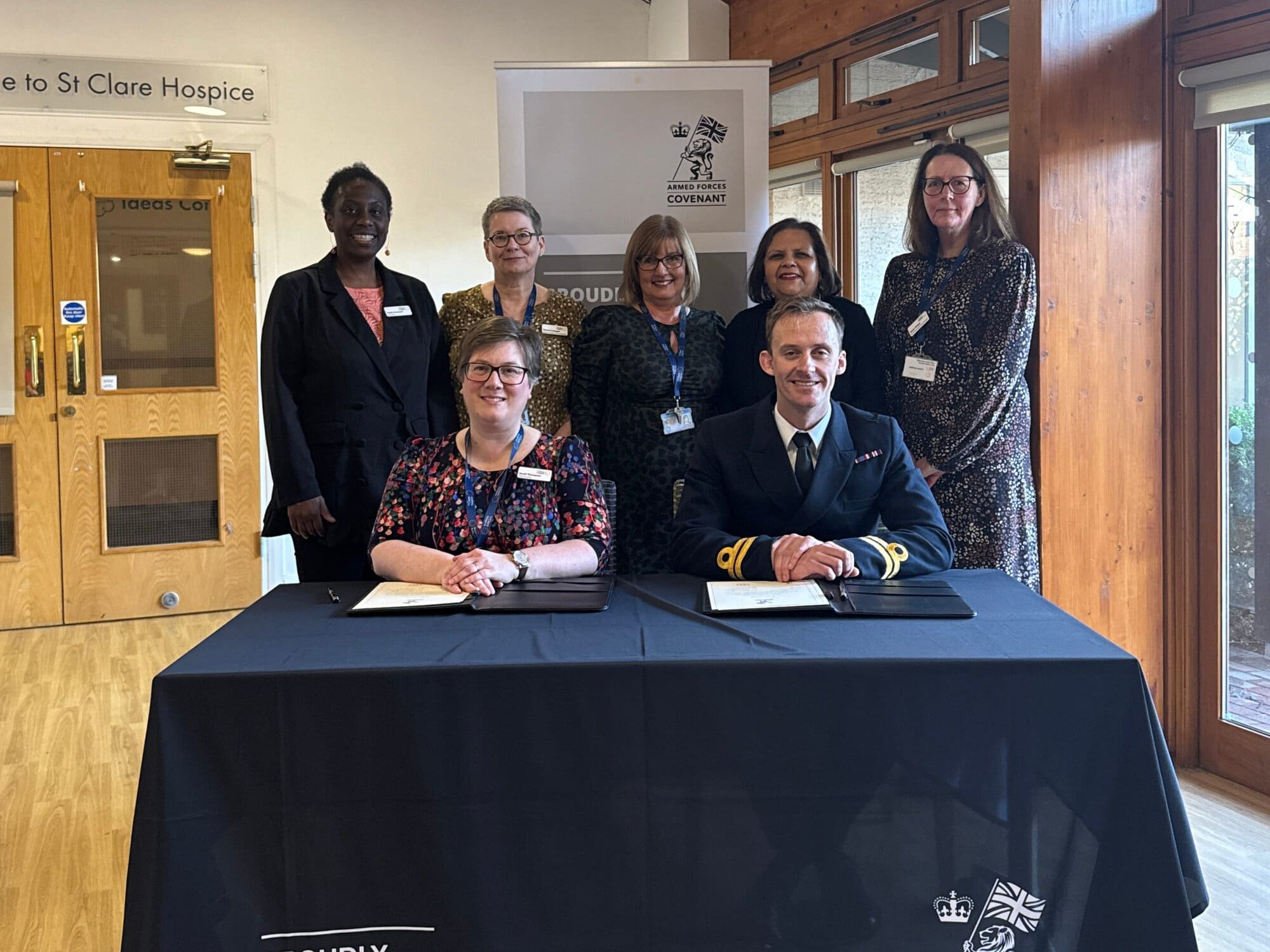
St Clare Hospice has reaffirmed its commitment to dignity, respect and compassion for all by signing the Armed Forces Covenant.
During a ceremony at the Hastingwood-based Hospice on Wednesday 5th February, St Clare CEO Sarah Thompson and the Royal Navy’s Lieutenant Samual Knight ADC signed the covenant, ensuring fair treatment for Armed Forces personnel, past and present, and their families – whether as an employee of St Clare Hospice or someone who is accessing its care and support.
 St Clare’s Director of Care and Quality, Sheona Evangeli, said: “As a hospice, we are proud to sign the Armed Forces Covenant, which pledges our commitment to ensuring that those who serve, who have served, in the Armed Forces, and their families, receive the care and support they deserve.
“By embedding the principles of the covenant into our organisation, we are helping to ensure our services are inclusive and accessible to everyone in our community by recognising the unique needs of the Armed Forces community so they receive compassionate, high quality care without disadvantage.”
The Armed Forces Covenant sets out the relationship between the nation, the government and the Armed Forces. It recognises that the whole nation has a moral obligation to members of the Armed Forces and their families, and it establishes how they should expect to be treated.
A veteran is described by the Ministry of Defence as anyone who has served for a day in HM Forces. There are approximately 2.75 million Armed Forces veterans living in the UK and, according to the 2021 Census, approximately 43,000 residing in Essex.
As part of its obligations under the Armed Forces Covenant, St Clare staff will help identify patients or members of their immediate family who have served in the Armed Forces so they can be signposted to specific support services if needed.
The charity will also look at how it can actively support staff who are members of the Armed Forces community, including veterans, reservists and military family members.
Sheona added: “We recognise the valuable skills and experiences they bring to the workplace and will look at developing policies that create a supportive and flexible working environment, such as accommodating training and deployment commitments, improving access to wellbeing and mental health support and fostering an inclusive culture where their contributions are valued and understood.
“By championing these kinds of initiatives, we can make sure our staff feel supported in balancing their careers with their service and personal commitments.”